About this tour
Five hours, about four kilometres, and hills that are meant to slow you down. Inês, a Lisboeta who grew up with fado coming from the next room, walks you from the Museu do Fado in Alfama to a Bairro Alto tasca the size of a kitchen where amateurs still stand up and sing without warning. On the way: petiscos and a jug of house red at Taberna Sal Grosso, the marble guitar in Largo da Severa where Maria Severa died at twenty-six after dragging fado out of the brothels and into aristocratic drawing rooms, pastéis de nata eaten scalding at the marble counter at Manteigaria, and the yellow house on Rua de São Bento where Amália Rodrigues lived for forty-six years. Fado has been UNESCO Intangible Cultural Heritage since 2011. The tour is really about one untranslatable word, and the last stop is where you finally feel it.
This tour is free thanks to our sponsors.
Subscribe to remove adsStops on this tour
- 1
Museu do Fado
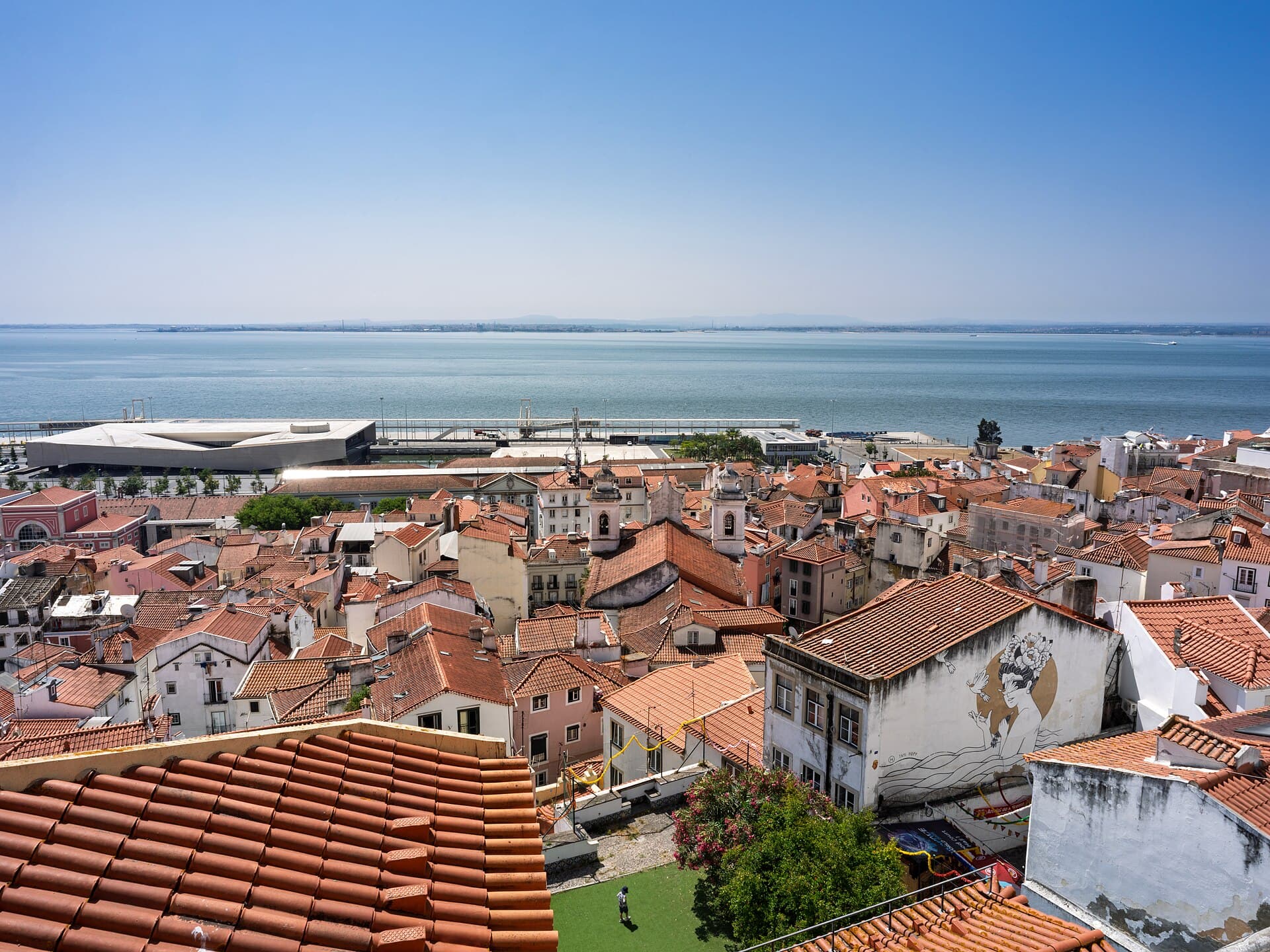
Largo do Chafariz de Dentro 1, at the foot of the Alfama hill where the neighbourhood runs down to the river. The building is not what it looks like: it went up in the nineteenth century as a water pumping station and reopened as the Museu do Fado on 25 September 1998. Go in carrying four words. Fado, from the Latin fatum, fate: music about the things you cannot change. Guitarra, the Portuguese guitar, pear-shaped, twelve steel strings in six courses, and nothing like the Spanish one. Fadista, the singer. Saudade, which the museum sensibly declines to translate, quoting instead the seventeenth-century writer Dom Francisco Manuel de Melo: a pleasure you suffer, an ailment you enjoy. The permanent exhibition runs chronologically from the 1840s taverns of Mouraria and Alfama to the present, and the audio guide is the reason to come: the listening stations let you put Severa's era, Amália Rodrigues, Carlos do Carmo and Mariza against each other inside half an hour, which no amount of reading will do for you. Open Tuesday to Sunday, roughly ten to six, closed Monday, adult admission around five euros. In the instrument room, look closely at a guitarra's head: the strings tune not on pegs but on a fan-shaped metal mechanism called a leque, worked with a key. Fado was inscribed by UNESCO as Intangible Cultural Heritage of Humanity in 2011.
- 2
Taberna Sal Grosso
Calçada do Forte 22, up the climb from the museum: one small room, a handful of tables, a blackboard that changes with whatever the market had that morning. Sal grosso is coarse salt, the crunchy kind thrown over a grilled fish, and it is a fair description of the cooking. The room seats very few people and Lisboetas book it, so come early or reserve. Start with the vinho da casa, the house red, ordered by the jug. Then build a table of petiscos, small plates, mostly in the five to ten euro range. Ask for peixinhos da horta, little fish of the garden, which are green beans in a light batter, and which Jesuit missionaries carried to Japan in the sixteenth century where they became tempura. Then pica-pau, woodpecker: cubes of beef with garlic, white wine, mustard and pickles that arrive still bubbling and are eaten with toothpicks, one peck at a time. Then, if it is on the board, polvo à lagareiro, grilled octopus with smashed potatoes under a flood of olive oil and garlic, or the ovos rotos. Finish with queijo da serra, a mountain sheep cheese so soft you cut the top off and spoon it out like honey. The bread and olives that arrive unasked are the couvert: they are not free, they cost a euro or two, and you may send them back untouched if you do not want them. Nobody will hurry you. An hour here is normal.
- 3
Largo da Severa & Rua do Capelão
At the mouth of Rua do Capelão in Mouraria, set into the ground of Largo da Severa, is a block of white marble cut with the silhouette of a Portuguese guitar. It was placed here in 2006, and it marks this crooked lane as the cradle of fado. The woman it honours is Maria Severa Onofriana, born 26 July 1820, dead on 30 November 1846 at twenty-six, almost certainly of tuberculosis, in a room on this street. She worked as a prostitute in the Mouraria brothels, which in the 1840s made this the poorest and roughest quarter in Lisbon, and she accompanied herself on the guitarra, which women did not do. Her affair with the Count of Vimioso, who took her to bullfights dressed in his own colours, carried a gutter music into aristocratic drawing rooms, and that is the moment fado stopped being a secret the city kept from itself. Look for the black shawl on any serious fadista tonight: the xaile preto is worn in her memory, and it is the one piece of costume in fado that means something specific. At Largo da Severa nº2 stands the house associated with her, rehabilitated in 2013 by the architect José Adrião and now the cultural space and fado house Maria da Mouraria. Portugal's first sound film, made in 1931, was simply called A Severa. Walk up Rua do Capelão slowly: cracked azulejo, façades leaning toward each other, somebody's canary in a window.
- 4
Manteigaria — Chiado
Rua do Loreto 2, on the corner of Largo de Camões, in a building from 1900 whose Art Nouveau façade almost nobody looks up at. You will smell butter and burnt sugar before you find the door. Manteigaria opened here in 2014 and makes one thing. Say dois pastéis de nata e uma bica: two custard tarts and a Lisbon espresso, small, strong and slightly bitter, at about a euro fifty a tart. Do not look for a table. Stand at the marble counter, where a glass wall lets you watch the bakers roll and fold the laminated dough, press it into little bronze tins and slide the trays in; when a fresh batch comes out somebody rings a bell, and that is the batch you want. Now the cinnamon question. Two shakers sit on the counter, canela and powdered sugar. Cinnamon is the Lisbon answer; the custard is sweet enough already, and the sugar mostly buries it. Eat it hot, standing, within a minute of the bell. The top should be blistered almost black in places, the pastry should shatter audibly, and the custard should still tremble. The recipe comes from Portuguese monasteries, which used enormous quantities of egg white to starch habits and turned the leftover yolks into custard to sell; when the religious orders were dissolved in 1834, the recipes escaped into the city. Manteigaria keeps long hours, well past dinner, so this stop also works late.
- 5
Casa-Museu Amália Rodrigues
Rua de São Bento 193: a yellow house on a narrow street sloping toward the river, easy to walk straight past. Amália Rodrigues, born in Alfama in 1920, lived behind that door for forty-six years, until her death in October 1999. Portugal declared three days of national mourning and closed the stock exchange, and the funeral crowds wept on live television. In 2001 her body was moved to the Panteão Nacional, the church of Santa Engrácia, where the country buries its kings and where she remains one of very few women. The house opened as a museum on 23 July 2001, exactly as she had asked. The practicalities matter here, because you cannot simply wander in: guided visits only, about forty minutes, Tuesday to Sunday, ten to six, around nine euros, and the groups are small, so leave time or book. Inside are her dresses, the famous shoe collection, seventeenth-century furniture, her writing desk, the drawing-room piano at which Alain Delon once sat, and the small kitchen where she cooked for friends, all kept like a photograph. If it is closed when you arrive, do this instead: stand at the door and look up at the tile panel on the façade, which carries her name and one title, A Rainha do Fado, the Queen of Fado. Carry her own line to the last stop: she said she sang because she had saudades of everything, including of things that had not happened yet.
- 6
A Tasca do Chico
Rua do Diário de Notícias 39, in Bairro Alto: shuttered and almost silent by day, unrecognisable after dark, and you are arriving on the hinge between the two. Check the address, because there is a second Tasca do Chico over in Alfama on Rua dos Remédios; this Bairro Alto room, open since 1993, is the original. Maybe thirty seats if you count the stools nobody wants, walls plastered floor to ceiling with black and white photographs of fadistas, Amália near the ceiling, Carlos do Carmo by the door, Mariza and António Chainho among a hundred names you will not know yet. Fado vadio, vagabond fado, sung by amateurs out of the room itself, happens on Monday and Wednesday nights from around nine; other nights are professional sets. Cash only. Budget twenty to thirty euros a head for wine and petiscos, and arrive by half past eight on vadio nights or you will not get in. Order one glass of tinto and a plate of presunto or olives, and do not order again mid-song. The etiquette is absolute. When the guitarra portuguesa is tapped to tune and the viola picks up the pulse underneath, the room stops: no cutlery, no whispering, no phone, no photographs. Traditionally someone calls out silêncio, que se vai cantar o fado, silence, the fado is about to be sung. When it ends, leave a beat before you clap. If nobody sings for an hour, that is also fado. Wait.
Reviews
No reviews yet
Be the first to share your experience