About this tour
Five hours through the sound of working-class London, from the 1976 punk explosion at the 100 Club to the grime revolution born on Roman Road in 2003. Jamie, a London music journalist with strong feelings about what this city used to sound like, takes you through Carnaby Street, Brixton (Bowie, Windrush, Electric Avenue), Notting Hill (The Clash, Carnival '76), a plate of pie and mash at M. Manze in Peckham, and finally Bow E3 — where Dizzee Rascal, Wiley and Rinse FM invented a sound that belonged to young Black London completely. Walking plus the Tube. Passionate, opinionated, nostalgic.
This tour is free thanks to our sponsors.
Subscribe to remove adsStops on this tour
- 1
Carnaby Street & The 100 Club
Carnaby Street today is a pedestrianised run of chain stores under a hanging arch sign, and it is worth saying plainly that punk did not happen here — this is where the decade punk killed kept its shopfront. In 1966 this was the centre of Swinging London: mods in parkas, the Small Faces, the Kinks, a boutique every few doors. Two things to walk to from this pavement. First, six minutes north at 100 Oxford Street, find the narrow doorway with the red frontage and the stairs going down: that is the 100 Club, running since 1942 when it opened as the Feldman Swing Club, and still a working venue you could buy a ticket for tonight. On Monday 20 and Tuesday 21 September 1976 it held the 100 Club Punk Special — Subway Sect, Siouxsie and the Banshees, The Clash and the Sex Pistols on the first night; Stinky Toys, the Vibrators, The Damned and Buzzcocks on the second. Those two days are when British punk stopped being a rumour. They are also when Sid Vicious, then drumming for the Banshees, threw a glass that shattered against a pillar and cost a young woman the sight in one eye. Second, the geography: Vivienne Westwood and Malcolm McLaren's shop SEX was not here but at 430 King's Road in Chelsea, about three miles southwest. The premises still trade, as Worlds End, with the backwards-running clock above the door.
- 2
Brixton: Bowie, Windrush & Electric Avenue
Come out of Brixton Underground, turn into Tunstall Road, and the first thing facing you is the side wall of the Morleys department store carrying Jimmy C's 2013 mural of Bowie as Aladdin Sane, lightning bolt and all. After his death on 10 January 2016 that wall became a national shrine, flowers stacked a metre out from the brick. He was born David Robert Jones on 8 January 1947 at 40 Stansfield Road, about ten minutes' walk away; the family left for Bromley when he was six. Now walk into the market. Electric Avenue, laid out in the 1880s, was the first market street in London lit by electric light — look up at the ironwork and the canopy line, then look at what is actually on the stalls: yam, green banana, plantain, salt fish, scotch bonnet. That is the Windrush inheritance in produce form. The Empire Windrush docked at Tilbury on 22 June 1948 with 492 passengers from Jamaica, Trinidad and elsewhere in the Caribbean; many were housed in the deep-level shelter at Clapham South, and the nearest labour exchange was here, which is why Brixton is where they stayed. In April 1981, after the Metropolitan Police ran Operation Swamp 81 through these streets, Brixton burned for three days. Eddy Grant watched it and wrote Electric Avenue, named after this street — on Killer on the Rampage, 1982, UK number two in January 1983.
- 3
Notting Hill: The Clash & Carnival 1976
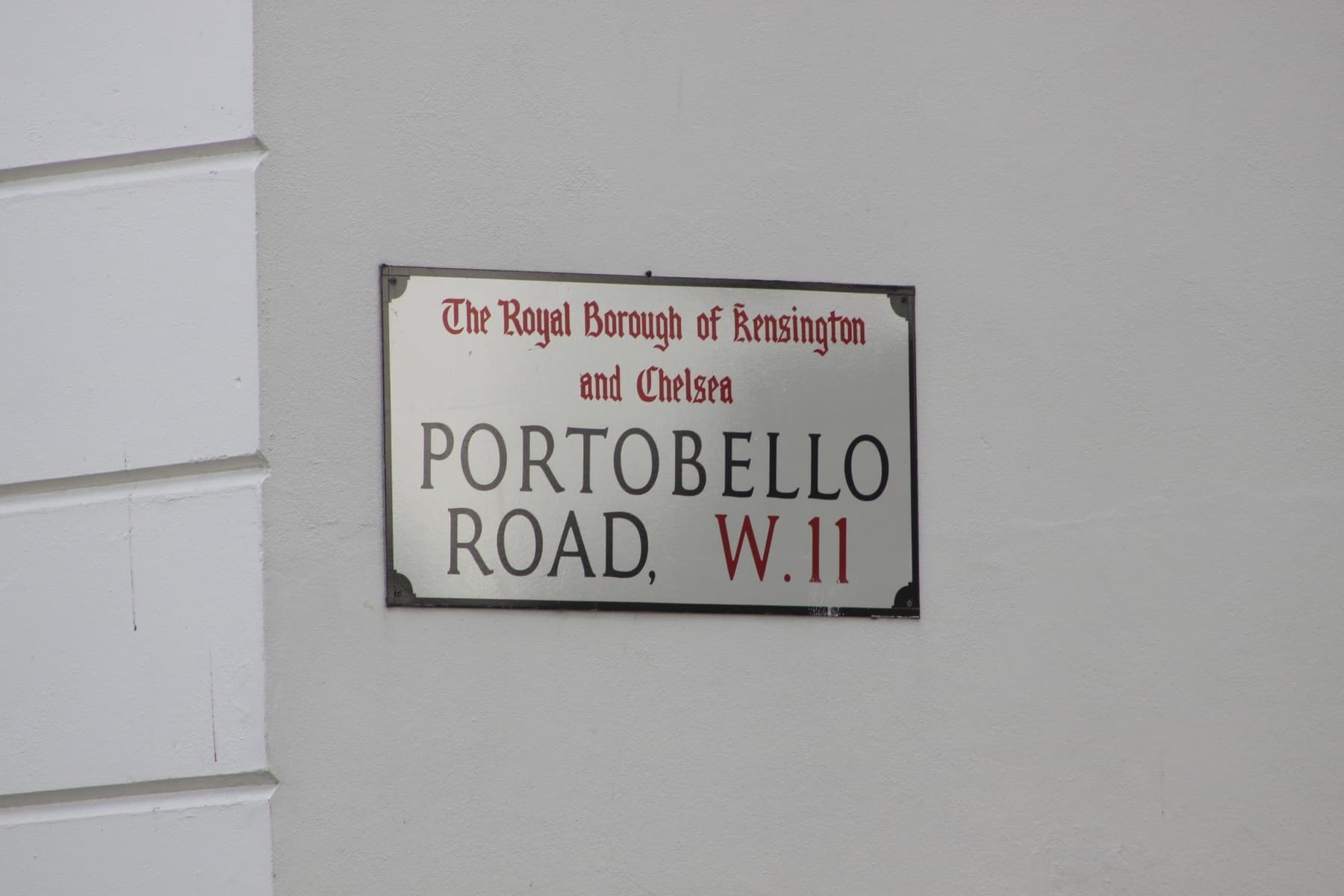
Stand where Ladbroke Grove runs under the Westway — the raised concrete motorway opened in 1970 that cut this neighbourhood in half — and you can see both Notting Hills at once: white stucco terraces now worth several million each, and the underside of a flyover. In 1976 only the second one felt true. The houses were half-derelict, boarded up for road schemes that never came, and full of squatters. Joe Strummer, Mick Jones and Paul Simonon were among them, and the basement reggae clubs along Ladbroke Grove are the reason The Clash understood Jamaican bass before any other white punk band did. On August Bank Holiday Monday, 30 August 1976, the Notting Hill Carnival — descended from Claudia Jones's indoor Caribbean carnival of 1959, itself a response to the 1958 race riots on these streets — broke. The Met had put 1,600 officers on the ground and spent the day stopping and searching young Black men; around five in the afternoon it turned. Over 300 officers were injured, 35 police vehicles damaged, around 60 people arrested: the first full-scale Black youth uprising against the Met in postwar Britain. Strummer and Simonon were in it, and White Riot, The Clash's first single in March 1977, came straight out of it — not a race-war song, but an argument that white working-class kids should find a cause of their own. The debut album followed in April 1977; London Calling on 14 December 1979. Carnival still runs here every August bank holiday weekend.
- 4
M. Manze Peckham: Pie, Mash & the Working-Class Thread
105 Peckham High Street: a green and cream painted timber shopfront, gold lettering, a blue plaque on the wall, and behind the glass a steaming cabinet of pies. Go in and look at the room rather than your phone — marble counters, white tile to the ceiling, wooden benches worn smooth, enamel signs. It has looked like this since it opened in 1927. Michele Manze, an immigrant from Ravello near Naples, had bought his father-in-law Robert Cooke's pie shop on Tower Bridge Road in 1902 and built a dynasty from it; his descendants still run this branch. In 1985 the shop was set alight during the Peckham unrest, and it took a five-year legal fight before it reopened in 1990. Order pie and mash with liquor, and know what you are ordering: liquor is not gravy. It is a thin green parsley sauce whose ancestor is the stock left over from stewing eels, back when eels were the cheap protein of the London docks. Add vinegar from the bottle on the table, salt, white pepper. If you want the real test, order jellied eels alongside — cold, set in their own jelly, bony, a genuinely acquired taste, and nobody will mind if you leave them. Treat it as a lunch shop rather than a restaurant: it shuts in the afternoon and does not open every day, so check the hours before you build a day around it.
- 5
Roman Road, Bow: Where Grime Was Born
Roman Road is a working market street — stalls out on Tuesdays, Thursdays and Saturdays, as they have been since the 1840s — and the specific address to find is 391. From 1993 to 2010 that was Rhythm Division, painted bright blue inside and out, the walls filled with white-label twelve-inches: no sleeve, no artwork, just a handwritten label, because the records were coming out faster than anyone could print covers for them. Wiley, Dizzee Rascal, Skepta, Kano, Ghetts, D Double E and Lethal Bizzle all went through that door. It is a coffee shop now. Look up over the shopfronts and you will see the towers of the Crossways Estate, where a kid called Dylan Mills grew up before he became Dizzee Rascal. The sound was assembled within a few streets of where you are standing: teenagers took UK garage, sped it up, stripped it back to bass, drum machines and MCs, and pushed it out on pirate stations broadcasting from aerials taped to these roofs — Rinse FM, started in Bow in 1994 by Slimzee and Geeneus and finally licensed on 106.8 FM in 2010, and Deja Vu FM. Wiley's Eskimo landed in 2002. Boy in da Corner, largely self-produced by Dizzee at eighteen, came out on XL Recordings on 21 July 2003 and won the Mercury Prize that September, beating Radiohead and Coldplay. Around the same week he was stabbed six times in Ayia Napa, and he and Wiley never repaired it.
Reviews
No reviews yet
Be the first to share your experience